Why Your Phone Is the Worst Thing to Lose (And What to Do About It)
Losing your wallet is stressful. Losing your keys is frustrating. But losing your phone? That's a different level of panic entirely — and for good reason.
Your phone isn't just a communication device anymore. It's your bank, your ID, your two-factor authentication, your boarding pass, your entire photo library, and the key to almost every account you own. When it goes missing, the consequences can ripple far beyond the inconvenience of being unreachable for a few hours.
What's Actually at Stake When You Lose Your Phone
Your Financial Accounts
Most banking apps stay logged in between sessions. If someone picks up your unlocked phone — or bypasses a weak PIN — they have direct access to your checking account, savings, and payment apps like Venmo, Cash App, or PayPal. Even a brief window of access can be enough to do serious damage.
Your Two-Factor Authentication
Here's the cruel irony: the security feature designed to protect your accounts — 2FA via SMS or an authenticator app — lives on your phone. Lose the phone, and you may be locked out of your own email, social media, and financial accounts while someone else potentially has access to them.
Your Photos and Personal Data
Years of memories, personal conversations, sensitive documents — all of it is on your phone. Even if cloud backup exists, a lost phone in the wrong hands means your private data is exposed before you can remotely wipe it.
Your Identity
Digital IDs, stored passwords, saved addresses, and personal details make a lost phone a goldmine for identity theft. The average person has dozens of apps with saved credentials — any one of which could be exploited.
The Standard Advice Isn't Enough
The usual recommendations — use a strong passcode, enable Find My iPhone, back up to the cloud — are all good practices. But they're all reactive. They help you recover or protect data after the phone is already gone.
Find My iPhone can locate your device, but only if it's powered on and connected. Remote wipe protects your data, but it also means your phone is gone for good. These tools manage the aftermath. They don't prevent the loss.
Prevention Is the Only Real Solution
The most effective way to protect everything on your phone is to never lose it in the first place. That sounds obvious — but until recently, there was no reliable way to get a real-time alert the moment you were about to leave your phone behind.
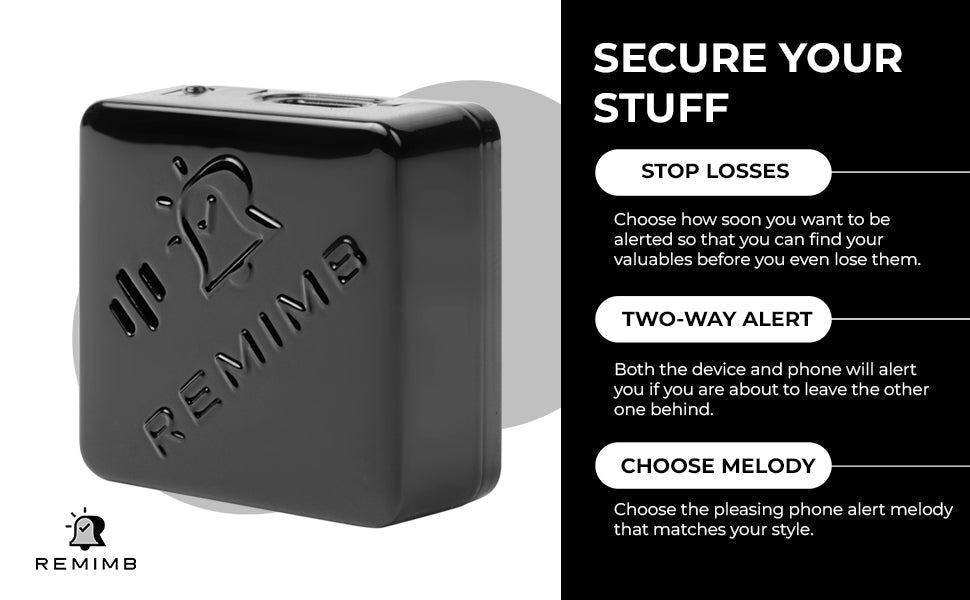
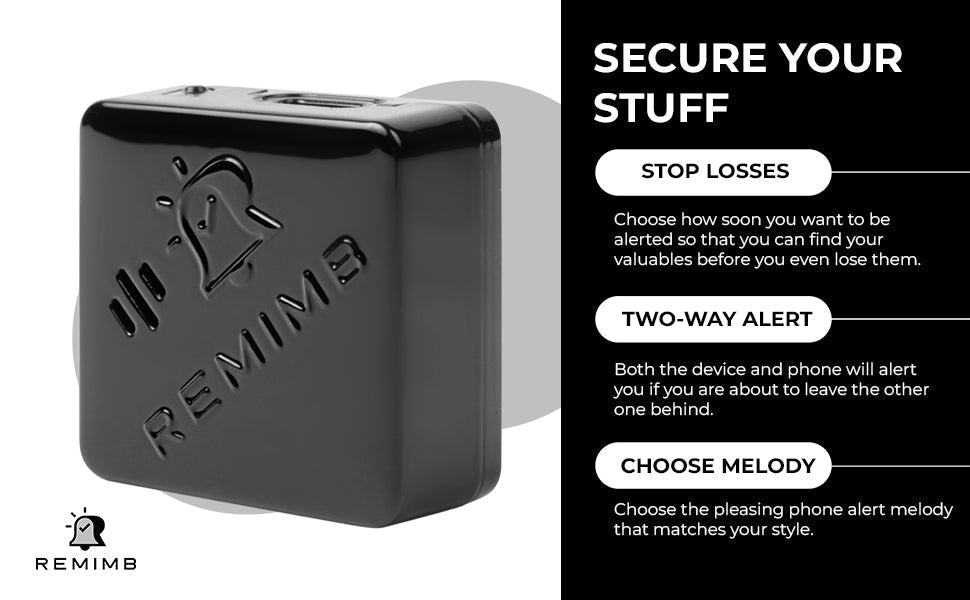
The Remimb Smart Keyring changes that. Using patent-pending two-way alert technology, Remimb alerts both your phone and your keyring simultaneously the moment they begin to separate. You don't need to open an app or check a notification — both devices ring in real time, giving you the chance to turn around before your phone is out of reach.
It works in restaurants, on transit, in rideshares, at the gym — anywhere you're likely to set your phone down and walk away. No crowdsourced network required. No pre-configured locations. Just an instant alert that keeps your phone where it belongs: with you.
Because the best way to protect everything on your phone is to make sure it never leaves your side.
Keep your phone — and everything on it — safe → Shop the Remimb Smart Keyring