The Hidden Cost of Losing Your Keys: Time, Stress, and Locksmith Bills
Most people think of losing their keys as a minor annoyance. You search for a few minutes, find them under a cushion, and move on. But for the millions of people who lose their keys in a truly inconvenient place — or can't find them at all — the real cost is much higher than it first appears.
The Time Cost
Studies suggest the average person spends around 10 minutes a day looking for misplaced items. Over a year, that adds up to more than 60 hours — over two and a half days — spent searching for things that should be right where you left them.
Keys are the most commonly lost item. And unlike a misplaced TV remote, lost keys have consequences: missed meetings, late arrivals, delayed pickups, and the cascading stress of a morning that started badly and never quite recovered.
The Financial Cost
When keys go truly missing — not just misplaced at home, but left at a restaurant, dropped in a parking lot, or forgotten on public transit — the financial hit can be significant:
- Locksmith callout: $75–$250 depending on time of day and lock type
- Key replacement: $50–$500+ for modern car key fobs with transponder chips
- Lock rekeying or replacement: $100–$400 if security is a concern
- Towing: If you're stranded, add another $75–$150
A single lost key incident can easily cost $200–$500 before it's resolved. And that's before accounting for the time lost waiting for a locksmith, arranging alternative transport, or dealing with the aftermath.
The Stress Cost
This one is harder to quantify but just as real. The panic of patting down every pocket and coming up empty. The mental replay of everywhere you've been. The sinking feeling when you realize they might actually be gone.
Chronic key-loss anxiety — the low-level dread of "where did I put them?" — is something many people live with daily. It's a small but persistent drain on mental energy that compounds over time.
Why a Key Finder Isn't the Full Answer
Traditional key finders like AirTag or Tile help you locate keys after they're lost. And that's genuinely useful — if your keys are still nearby, still powered, and in range of the right network.
But they don't eliminate the time cost of searching. They don't prevent the stress of realizing your keys are missing. And they can't help you if your keys were left somewhere with no network coverage, or if the battery has died.
More importantly: they don't stop the loss from happening.
The Smarter Investment: Prevention
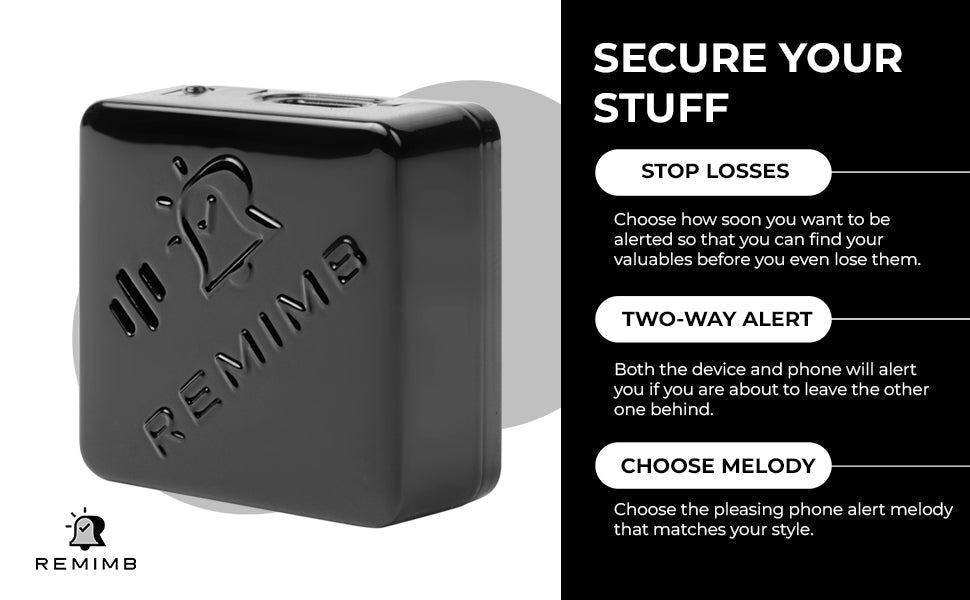
The Remimb Smart Keyring takes a fundamentally different approach. Instead of helping you find lost keys, it alerts you the moment you're about to leave them behind — before separation happens.
Using patent-pending two-way alert technology, Remimb rings both your keyring and your phone simultaneously the instant they begin to move apart. You get a real-time warning while you can still do something about it — turn around, grab your keys, and carry on without the panic, the locksmith call, or the $300 bill.
When you add up the time, money, and stress that a single lost-key incident costs, a device that prevents that from happening isn't just convenient. It pays for itself the first time it saves you.
Stop paying the hidden cost of lost keys → Shop the Remimb Smart Keyring