Article: How to Stop Losing Things: The Science Behind Why We Misplace Everyday Items
How to Stop Losing Things: The Science Behind Why We Misplace Everyday Items
You put your keys down. You were sure of it. And now they're gone.
If this sounds familiar, you're not forgetful — you're human. Misplacing everyday items is one of the most universal frustrations people experience, and it turns out there's solid cognitive science behind why it happens. More importantly, understanding why we lose things points us toward a smarter solution than just retracing our steps.
Why Your Brain Loses Track of Things
1. Automaticity: When Your Brain Goes on Autopilot
Most of the time, placing your keys or phone down is an automatic behavior — something you do without conscious thought. Cognitive scientists call this automaticity. When an action is routine enough, your brain stops logging it as a meaningful event. You put your keys on the counter while thinking about dinner, and your brain simply doesn't bother to record it.
The result? No memory of where you left them. Not because you forgot — but because you never truly noticed in the first place.
2. Attention Residue: Your Mind Was Already Somewhere Else
Research by organizational psychologist Sophie Leroy introduced the concept of "attention residue" — the mental carryover from one task to the next. When you walk in the door still mentally processing a work call or a stressful commute, your attention is split. You're physically present, but cognitively elsewhere.
This divided attention is exactly when things get misplaced. Your hands act; your brain doesn't follow.
3. Prospective Memory Failures
Prospective memory is your ability to remember to do something in the future — like remembering to grab your keys before you leave. Unlike recalling a past event, prospective memory requires your brain to trigger a reminder at exactly the right moment. And it's notoriously unreliable, especially under stress, distraction, or time pressure.
This is why you can walk out the door confidently and still leave your keys on the kitchen counter.
The Items We Lose Most
Studies consistently show the same culprits at the top of the list:
- Keys — Lost an average of several times per week by habitual misplacers
- Phone — Ironic given it's also the tool we use to find everything else
- Wallet — High stakes, since it carries ID, cards, and cash
- Glasses and remotes — Lower stakes, but a daily source of frustration
What these items have in common: they're small, frequently moved, and handled during transitional moments — exactly when attention is lowest.
Why "Finding" Solutions Miss the Point
The traditional response to losing things is reactive: retrace your steps, check the usual spots, call your phone. And when that fails, there's a whole industry of Bluetooth trackers designed to help you locate lost items.
But here's the problem — by the time you're searching, you've already lost time, created stress, and possibly missed something important. Reactive solutions treat the symptom, not the cause.
The real fix isn't finding things faster. It's not losing them in the first place.
Working With Your Brain, Not Against It
Since the root cause is a failure of attention at the moment of placement, the most effective solutions are ones that don't rely on your attention at all. Instead of asking your brain to remember, they create an external alert system that catches the gap before it becomes a problem.
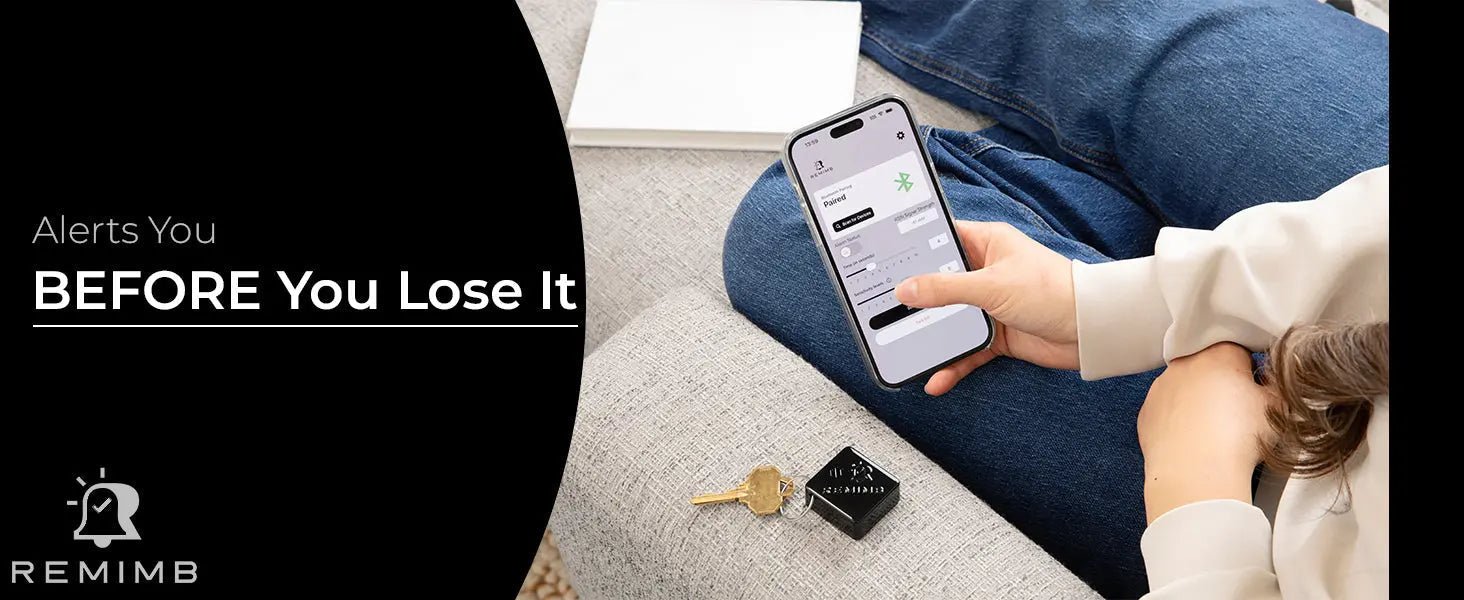
This is the principle behind proactive alert technology — systems that monitor the proximity between you and your essentials in real time, and notify you the moment separation begins. Not after you've lost something. Before.
It's the difference between a smoke alarm and a fire extinguisher. Both are useful — but one stops the problem before it starts.
Building Better Habits (With a Safety Net)
Cognitive science also offers some practical habit strategies to reduce misplacement:
- Designated spots — Always place keys, wallet, and phone in the same location. Over time, this builds a new automatic behavior that your brain does record.
- Verbal confirmation — Saying out loud "keys on the hook" forces conscious attention onto an otherwise automatic act.
- Transition rituals — Create a brief pause when entering or leaving a space to do a quick mental check. Even 5 seconds helps.
These habits help — but they require consistent effort and break down under stress. That's why pairing good habits with a reliable technological safety net is the most effective approach.
The Bottom Line
Losing things isn't a character flaw. It's a predictable outcome of how the human brain handles routine, attention, and memory. The good news: once you understand the mechanism, you can design around it.
Stop relying on memory alone. Build systems that alert you before separation happens — so the frantic search never has to start.
Remimb was built exactly for this. Proactive two-way alerts between your keyring and your phone, so your brain gets the backup it was never designed to provide on its own.
Stop the search before it starts.